OUR TEAM
The Society, Space and Planning Lab brings together passionate researchers exploring the intersections of urban and regional planning, geography, and sociology. The lab is dedicated to advancing research on the social and spatial dimensions of places, communities, and planning.
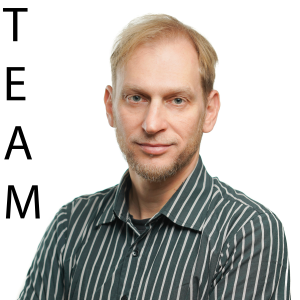
Emil Israel
Head of Lab, Principal Investigator
emil.israel@technion.ac.il
For additional information regarding Professor Israel’s biography, please refer to the following link: More about Professor Emil Israel’s Biography
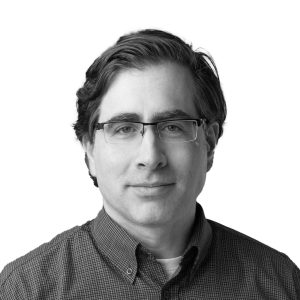 Tal Feder
PostDoc
talfeder@gmail.com
Cultural Justice and core-periphery disparities: A normative turn in the geography research of culture and Art
PDF
Dr. Tal Feder investigates in the lab of Society, Space and Planning the relationship between culture, spatial justice, and public policy, with a particular focus on inequalities in access to arts and culture. His research develops a normative framework for understanding cultural justice, examining how opportunities to engage with the arts are distributed across core and peripheral regions and how these disparities shape individual well-being and social inclusion.
Building on theories of justice, cultural sociology, and human geography, Tal combines quantitative methods, computational data collection, and spatial analysis to study cultural participation, artistic production, and access to cultural infrastructure. His current research develops innovative tools for measuring cultural justice, integrating large-scale mapping of cultural activities with analyses of individual attitudes and behaviors to examine how social and spatial inequalities influence people's opportunities to experience, create, and engage with the arts.
Tal's work bridges urban planning, cultural policy, and sociology, advancing both theory and practice in the study of cultural inequalities. His research contributes to the development of evidence-based cultural policy while providing new conceptual and methodological tools for evaluating equity in arts and culture and promoting more inclusive and culturally just communities.
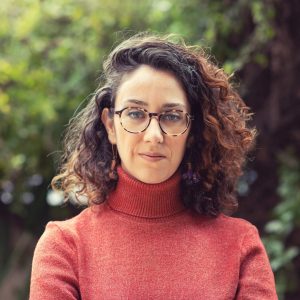
Marina Lubanov
Researcher, PhD Candidate
marinalubanov@gmail.com
Are healthy lifestyle practices simply a matter of individual choice? Dynamics of spatial and social space differences in adherence to healthy lifestyle habits
In her thesis, Marina investigated food security in the State of Israel.
Marina Lubanov investigates now in the lab of Society, Space and Planning how urban environments and social inequalities shape people's ability to adopt and maintain healthy lifestyles. Her research challenges the common assumption that healthy behaviors are primarily a matter of individual choice, examining instead how social position, neighborhood characteristics, and the built environment influence adherence to health recommendations.
Drawing on Pierre Bourdieu's theory of capital and contemporary research in public health and urban planning, Marina develops a framework for measuring healthy lifestyle adherence across different social groups and urban settings. Her work explores how factors such as access to healthy food, opportunities for physical activity, social networks, and neighborhood design interact with social and cultural resources to encourage—or constrain—healthy behaviors.
By integrating perspectives from urban planning, sociology, and public health, Marina's research offers a new approach to understanding health inequalities in cities. Her findings are expected to contribute to the development of planning and public health policies that address the social and spatial conditions necessary for healthier and more equitable communities.
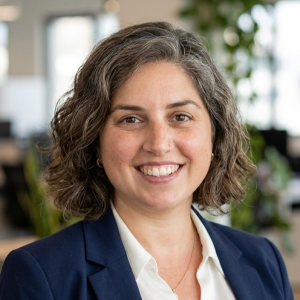
Noa Hagay-Gross
Researcher, M.Arch.
hagaynoa@gmail.com
The social tensions of intra-class divisions within homogenic communities and their impact on processes of social distinction: The case study of Kibbutzim communities in Israel
Noa explores the social dynamics that emerge within communities often perceived as socially homogeneous. Her research focuses on Israeli kibbutzim as a case study to examine how differences in economic, social, and cultural capital shape internal social hierarchies and patterns of spatial distinction, even within communities that share a common middle-class identity.
Drawing on Pierre Bourdieu's theory of capital, Noa combines quantitative methods with spatial analysis to explore how variations in social, cultural, and economic resources influence everyday interactions, residential patterns, and community cohesion. Her work challenges the common assumption that socially homogeneous communities are internally egalitarian, demonstrating that subtle forms of inequality can produce meaningful divisions within them.
By uncovering the hidden social structure of kibbutz communities, Noa's research contributes to a broader understanding of social stratification, place attachment, and spatial inequality. Her findings are expected to provide new insights into the ways community structure influences social integration, local identity, and planning policies aimed at fostering more inclusive and cohesive communities.
Noa is the recipient of the 2024 Yitzhak Tabenkin Scholarship, conferred by the Yad Tabenkin-The Kibbutz Research Institute.
Noa also received the 2026 Arthur Schragenheim Award for Outstanding Lecture at the Emerging Researchers Conference, conducted at the Faculty of Architecture and Town Planning at the Technion-Israel Institute of Technology.
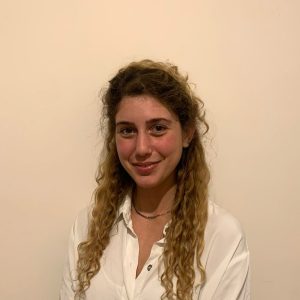 Yael Munk
Researcher, M.Sc Student
yael.munk@campus.technion.ac.il
Arts Justice in Space: Between Core and Periphery. The Case Study of Israel
Yael explores the concept of arts justice and the ways in which access to arts and culture is shaped by spatial inequality. Her research examines how opportunities to experience, create, and engage with the arts differ between central and peripheral regions in Israel, and how these disparities influence cultural participation and social inclusion.
Building on the capabilities approach and contemporary theories of distributive and recognition justice, Yael investigates artistic justice through three interconnected dimensions: arts consumption, arts education, and artistic creation. Using qualitative interviews with residents, educators, cultural practitioners, and local decision-makers, she examines how people experience access to cultural resources, develop meaningful connections with the arts, and perceive the role of culture in their everyday lives.
By introducing a normative framework for evaluating equity in arts and culture, Yael's research contributes to a broader understanding of spatial justice beyond traditional concerns such as housing and transportation. Her work highlights the importance of cultural opportunities as a component of well-being and social inclusion, while offering new insights for planning policies that promote more equitable and culturally inclusive communities.